
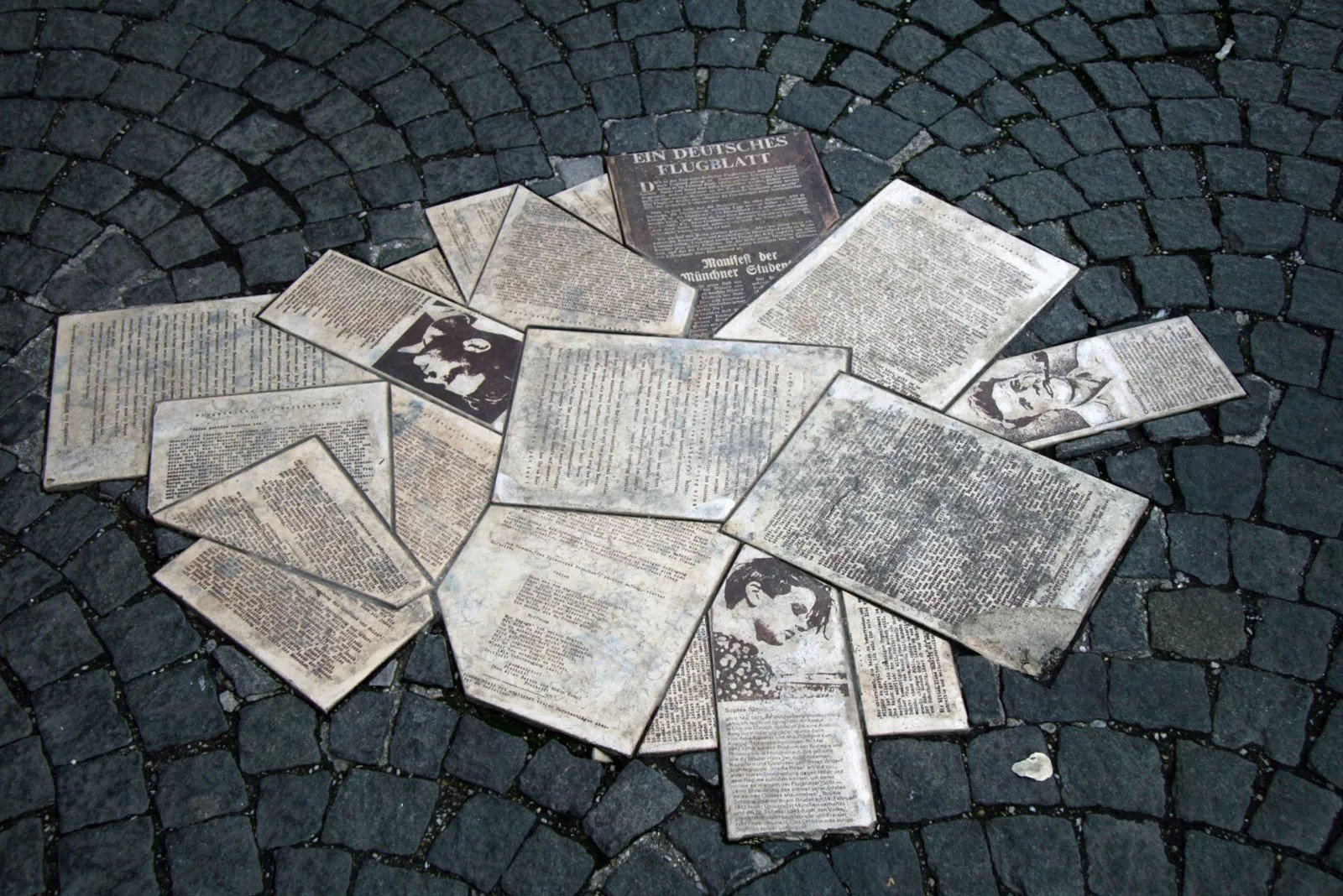
The Holocaust Center of Florida presents
2026 White Rose Essay Contest
The 2026 theme is
Fragility of Democracy
Registration opens January 9, 2026.
-
The HMREC White Rose Essay Contest provides an authentic speaking, listening, and writing experience for high school students.
Using survivor testimony and primary sources, students can synthesize researched information to demonstrate understanding of the Holocaust and how it happened. They can use the contest to better understand the rhetorical concepts of audience, purpose, genre, and style.
By conducting original research and consuming and producing across multimedia, the contest provides students an opportunity to explore an integrated model of literacy.
-
Participants must be students in the state of Florida.
Students must be currently enrolled in grades 8-12.
Students must provide sponsorship by a school or teacher. One entry per student is allowed.
Educators need to submit an “intent to enter” form available here.
Essays must be submitted either by email to spoynor@holocaustedu.org or by mail to:
ATTN: Stephen Poynor
HMREC
851 N Maitland Ave
Maitland, FL 32751
-
Research papers will be evaluated on adherence to presented prompts as well as the development of content and theme, original expression, historical accuracy, grammar, and mechanics. They must meet the following detailed criteria:
a. Adherence to theme responding to presented prompts.
b. Evidence of historical research - comprehensive and accurate; not written in the first-person or as fiction; substantial supporting detail with a minimum of 3 direct quotes that support your response. Minimum of 5 primary sources, including at least (1) testimony used in research.
c. Synthesis of information - gathered from a variety of electronic and nonelectronic sources, all properly cited; all citation styles are accepted, but citations must be consistent; internal citations, footnotes, or endnotes are acceptable. The databases and links to SPONSOR APPROVED internet sources are provided, but you are not limited to those sources. Wikipedia is not an acceptable original source.
d. Writing must be free of plagiarism - those passages copied directly from other sources, without proper citations, or containing vast amounts of quoted or minimally paraphrased material are subject to disqualification.
e. Personal insight and reflection– describing your own feelings and using a creative writing style.
f. Typed - double-spaced, with one-inch margins and size 12 font; Times New Roman font; 750-word minimum.
g. Maximum of 1500 words; all words in the body of the paper are counted in the total; internal citations do not count. The paper must include a well-developed introduction with body and conclusion.
h. Essays submitted by the due date.
-
January 9, 2026 - Registration start date
February 4, 2026 - Submissions start date
March 19, 2026 - Digital submission due date
April 14, 2026 - Awards ceremony at Yom HaShoah commemoration
-
$1,000 - 1st Place Student | $500 Sponsoring Teacher
$500 - 2nd Place Student | $250 Sponsoring Teacher
$250 - 3rd Place Student | $100 Sponsoring Teacher
Awards will be distributed at the Yom HaShoah Commemoration event on April 19, 2026.
Individuals will be responsible for claiming/reporting for tax purposes on all awards.
Inspiration: Response to the Holocaust
The Holocaust shows how democracy can fail when laws are used to exclude, dehumanize, and target groups of people. Rights were not taken away at all at once. Instead, governments passed policies that gradually normalized discrimination, making persecution appear legal and acceptable.
As these laws were enforced, individuals and communities were forced to respond. Some resisted by helping others survive or by challenging unjust systems, while many complied or remained passive, allowing harm to continue. These responses reveal how ordinary actions—and inaction—can either weaken or defend democratic values.
Studying these choices helps students understand how prejudice can become policy, why resistance matters, and what it means to protect democracy and human rights in the present day.

“Somebody, after all, had to make a start. What we wrote and said is also believed by many others. They just don't dare express themselves as we did.”
-Sophie Scholl
Essay Prompt: The Fragility of Democracy
Step 1: Research Points to Consider
-
How did laws and policies change daily life (schooling, work, housing, movement, identity papers, curfews, rationing, forced labor)? What did “normal life” look like as rights were removed step-by-step?
-
How did legal restrictions reshape family life—marriage, parenting, hiding children, separation, deportations, and choices families were forced to make? What did “protection” look like when the law itself was a weapon?
-
What actions did targeted people take to resist, adapt, or survive (underground schooling, forged papers, mutual aid, smuggling food, spiritual/cultural resistance)? What were the risks and outcomes?
-
How did non-Jewish neighbors, coworkers, clergy, teachers, or officials respond to discriminatory laws? Who helped, who complied, and why? What were the measurable outcomes (people sheltered, networks built, escapes enabled)?
-
How did everyday roles (clerks, police, teachers, doctors, employers, local officials) enforce discriminatory policies? How did “just doing a job” contribute to a system of persecution?
-
If you choose to focus on women, connect women’s experiences to policy: forced labor expectations, sexual violence and exploitation, pregnancy/infanticide pressures, family separation, “caretaking” burdens, and women’s roles in resistance or rescue. Explain how gender shaped vulnerability, survival strategies, and memory.
Choose ONE focus area below to guide your research. Your paper should connect your topic directly to laws and policies leading up to and during the Holocaust and explain how those democratic structures were used to harm entire populations.
Step 2: Write
Using your research, take a clear stance on the significance of how laws and policies enabled persecution and shaped the lives of individuals (victims, survivors, rescuers, and/or perpetrators). Your analysis should:
Explain how democratic or legal systems were changed to remove rights and normalize harm.
Use specific individuals (at least one testimony-based person) as evidence of how policy became lived experience.
Include measurable outcomes where possible, such as:
numbers of people helped/hidden/transported,
documented impacts of resistance networks,
arrest/execution totals for a group or operation,
deportation numbers from a city/region, or
how a specific law changed access to jobs, schools, housing, or citizenship status.
Support your stance with survivor testimony, primary sources, and scholarly/historical sources, and explain why those sources prove your argument.
Step 3: Reflect
What lessons do we learn from the Holocaust about the fragility of democracy and the dangers of discrimination becoming law? Reflect on how the stories you studied help us understand:
how prejudice can become policy,
why resistance (small or large) matters,
how communities respond under pressure (bystanders, helpers, collaborators),
and what protecting human rights requires today.
Then connect those lessons to a current issue—such as gender-based violence, persecution, racism/antisemitism, censorship, propaganda, attacks on civil rights, or state-sponsored discrimination—and explain one realistic action individuals or communities can take to prevent harm.
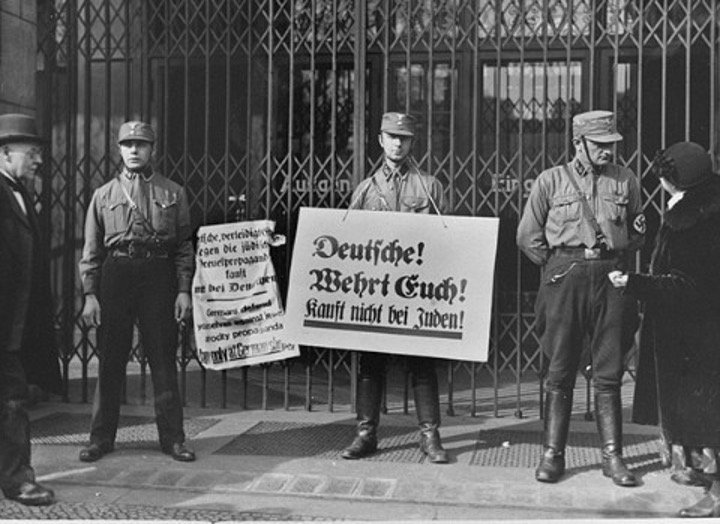
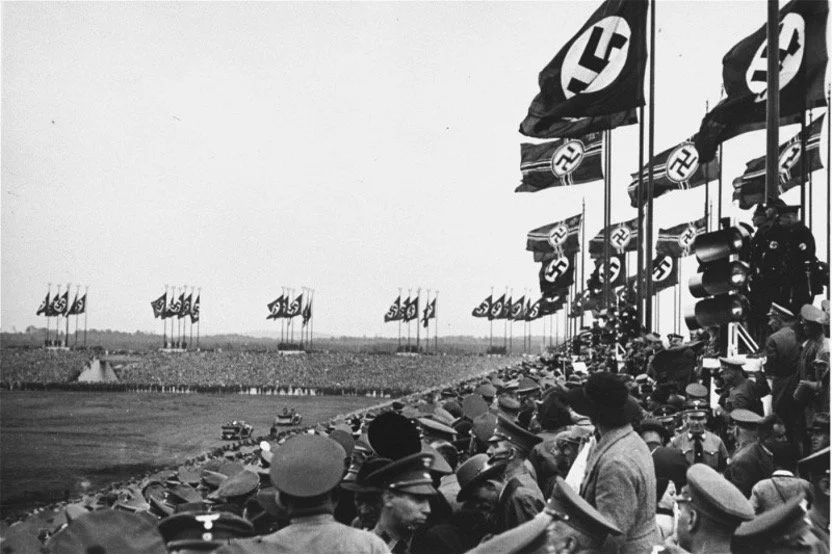
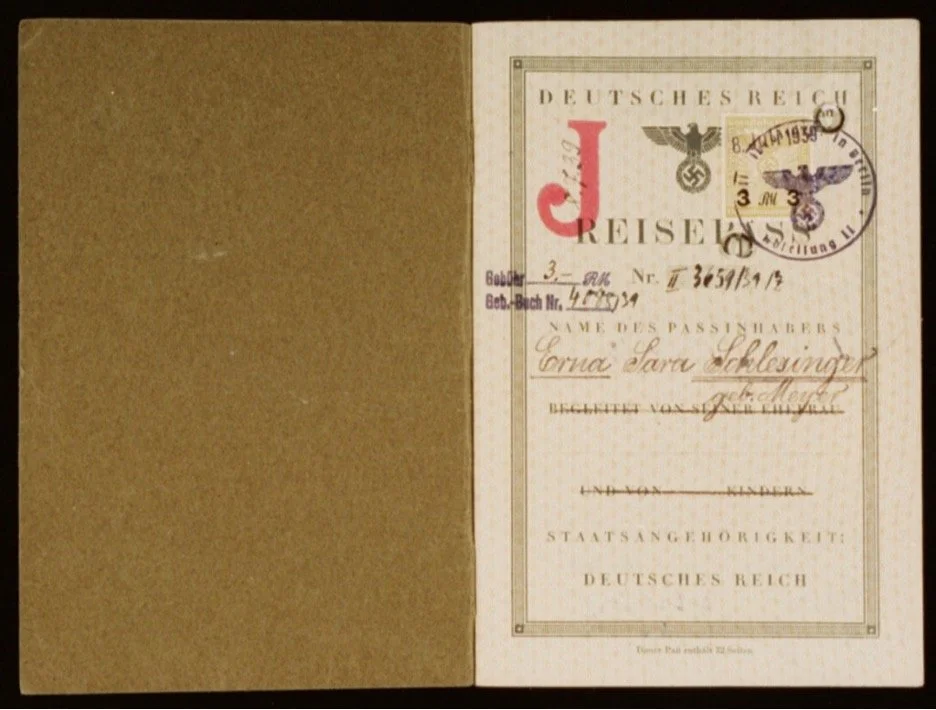
Images: United States Holocaust Memorial Museum (USHMM) — Boycott of Jewish-owned businesses, Berlin, Germany, April 1, 1933 Holocaust Encyclopedia; United States Holocaust Memorial Museum, Massed crowds at the 1935 Nazi Party rally in Nuremberg, September 1935; United States Holocaust Memorial Museum, German passport issued to Erna Sara Schlesinger (inside).
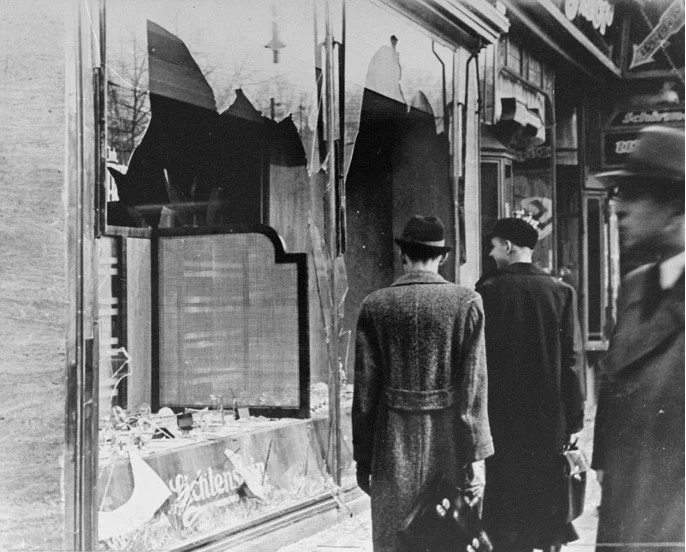
United States Holocaust Memorial Museum, Shop damaged during Kristallnacht.
Resources
-
Rise of Legal Exclusion and the Road to Genocide – Context and definitions (USHMM Encyclopedia)
1936 Berlin Olympic Images – Propaganda, politics, and international perception (USHMM Collections)
The Évian Conference (1938) – National responses to refugees and limits of international action
Wagner-Rogers Bill Debate & Immigration Policy – U.S. legislative response to refugee crisis
-
Survivor and witness testimony helps students connect laws, government policy, and democratic breakdown to lived experiences. Use testimony to explore how legal decisions affected safety, rights, movement, and survival during the Holocaust.
How to use IWitness for research.
IWitness gives access to curated video testimony from Holocaust survivors and witnesses, which students can cite in their essays to show how policy decisions were experienced at the individual level.
-
Below are documents and collections that students may use as primary sources to support arguments about how laws and international decisions shaped the course of events leading to and during the Holocaust:
Molotov–Ribbentrop Pact (Non-Aggression Treaty, 1939)
Treaty between Nazi Germany and the Soviet Union whose secret protocols divided Eastern Europe and enabled the start of World War II. Source materials and imagery available through the USHMM
Holocaust Encyclopedia.Wagner-Rogers Bill Debates & Timeline
Primary evidence of U.S. congressional consideration of refugee policy in the face of humanitarian crisis, showing limits of democratic action under xenophobic / political pressure.
Holocaust Encyclopedia+1Reichskonkordat
Treaty between Nazi Germany and the Vatican (not online at USHMM, but widely available in archives and secondary sources; students should look for official treaty text and analysis in research databases).1936 Olympic Images
Photographs and documents showing how Nazi Germany used international events to project legitimacy while excluding rights at home (USHMM Collections).
collections.ushmm.orgStatements from the Évian Conference (1938)
Records from the international gathering where 32 nations discussed refugee policy but made limited commitments — a key moment in illustrating global democratic reluctance to act.
Holocaust Encyclopedia